
AMD Ryzen 7 9800X3D Review: The New King of Gaming CPUs?
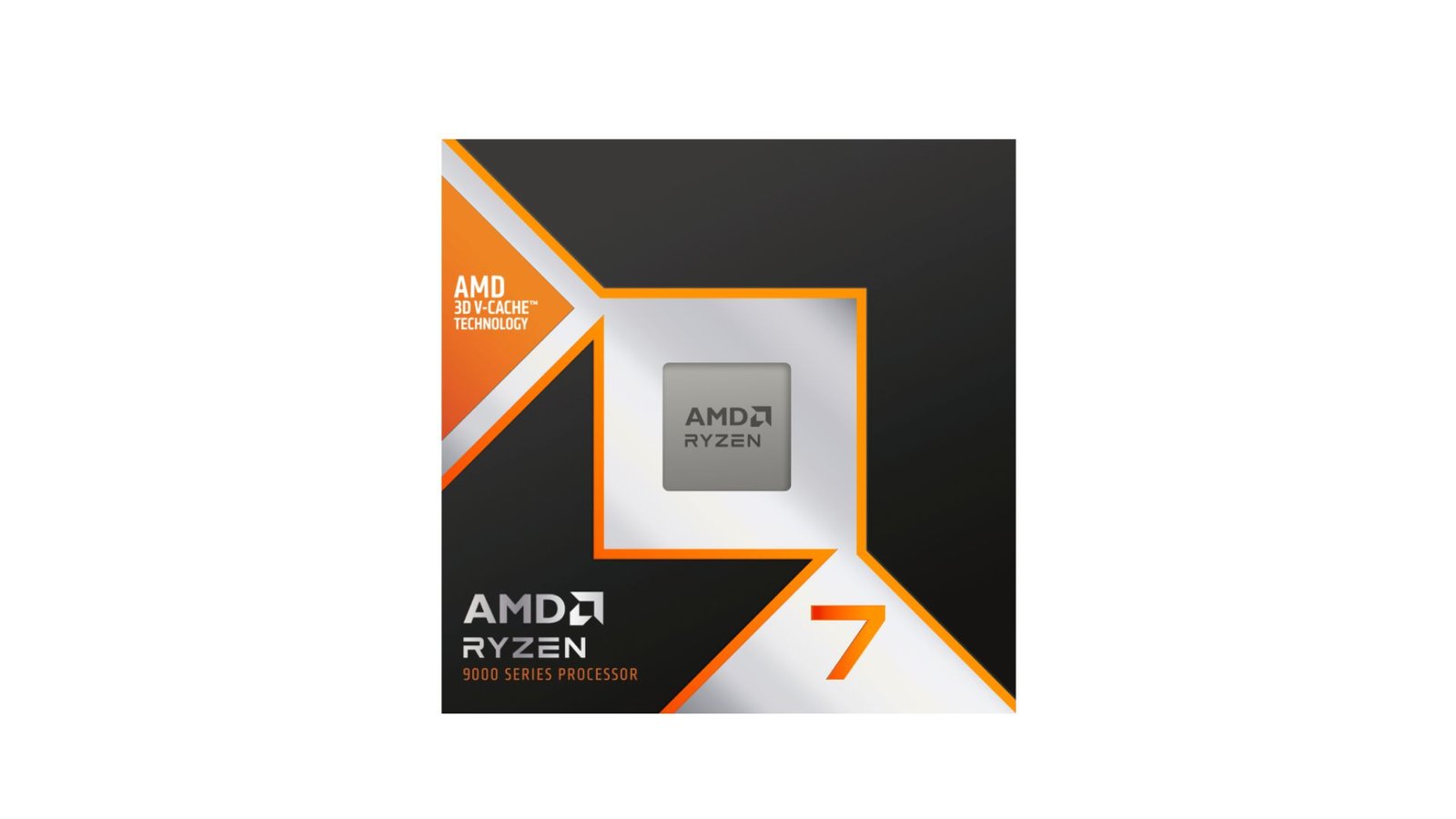
The AMD Ryzen 7 9800X3D is AMD’s latest flagship gaming processor, designed for players who demand the highest frame rates and the lowest latency in modern titles. As the successor to the enormously popular Ryzen 7 7800X3D, it promises meaningful improvements in IPC, efficiency, and 3D V-Cache utilization. With Zen 5 architecture and an upgraded cache design, the 9800X3D targets competitive gamers and enthusiasts looking for a performance edge without jumping to high-core-count workstation chips. In this review, we examine its real-world gaming gains, productivity behavior, thermals, and how it stacks up against both AMD’s older 7800X3D and Intel’s Core i7-14700K.
- Cores: 8
- Threads: 16
- Base Clock: 4.7 GHz
- Boost Clock: 5.7 GHz
- Key Feature: 3D V-Cache (Zen 5)
| Key Specifications | |
|---|---|
| Cores | 8 |
| Threads | 16 |
| Base Clock | 4.7 GHz |
| Boost Clock | 5.7 GHz |
| Cache | 96MB 3D V-Cache |
| Architecture | Zen 5 |
| TDP | 120W |
| Socket | AM5 |
In This Review
Overview & Key Features
The AMD Ryzen 7 9800X3D builds upon the proven formula of the 7800X3D: a fast 8-core Zen architecture combined with a massive slab of 3D V-Cache designed to improve gaming performance. The move to Zen 5 delivers higher IPC, improved efficiency, and better memory handling, all of which benefit latency-sensitive workloads. AMD also optimizes the cache controller in this generation, helping modern titles scale more consistently with large cache capacity.
The 9800X3D retains a familiar 8-core, 16-thread configuration, which remains the sweet spot for gaming. Its 96MB of L3 cache enables dramatic gains in open-world games, competitive shooters, and titles that rely heavily on memory bandwidth. While the TDP sits at 120W, the chip’s efficiency remains notable thanks to architectural improvements and lower average voltage requirements. Like other AM5 CPUs, it supports DDR5 memory and PCIe 5.0 storage and graphics, making it suitable for long-term platform builds.
Performance & User Experience
In gaming workloads, the Ryzen 7 9800X3D offers exceptional performance, often topping charts across a wide range of modern titles. Games that benefit from cache, such as Baldur’s Gate 3, Fortnite, CS2, and Starfield, see especially strong results. Compared to the 7800X3D, the 9800X3D typically delivers double-digit percentage improvements depending on title and resolution, especially at 1080p and 1440p. Even at 4K, where GPUs do most of the heavy lifting, frame pacing and lows show noticeable gains.
Thermals remain manageable despite higher boost clocks. Most users will see temperatures in the mid-70s under gaming loads, and proper cooling can keep sustained workloads under control. In productivity, the 9800X3D performs well but is not the fastest Zen 5 option due to its cache-optimized design. Heavy multi-threaded tasks like rendering or encoding favor higher-core Ryzen and Intel CPUs.
Everyday responsiveness is excellent, and memory performance has improved compared to Zen 4. For users upgrading from older Ryzen generations, boot times, application responsiveness, and background task handling feel smoother. Overall, the 9800X3D provides an outstanding user experience for gamers and mixed-use systems that prioritize low latency and high efficiency.
Comparison
Against the previous generation Ryzen 7 7800X3D, the 9800X3D delivers consistent improvements across gaming workloads. While the uplift varies depending on title, the newer chip offers better lows, higher 1% frame rates, and improved memory scalability. It also benefits from the Zen 5 platform’s IPC gains, giving it stronger performance in hybrid use scenarios beyond pure gaming.
The comparison with Intel’s Core i7-14700K is more nuanced. The 14700K generally wins in multi-threaded productivity thanks to its hybrid architecture and higher core count. However, in gaming, the 9800X3D takes a clear lead, often outperforming Intel while consuming significantly less power and generating less heat. Users who prioritize streaming, editing, or workstation workloads may prefer the Intel chip; pure gamers will see better performance and efficiency from the 9800X3D.
When evaluating platform value, AM5 offers long-term support, which further strengthens the case for AMD. Intel’s 14700K rests on the final generation of the LGA1700 socket, making AM5 a better future-proofing choice for PC builders.
Looking for more options? Check out our Best prebuilt gaming towers.
Pros & Cons
- Exceptional gaming performance
- Low power consumption for its class
- Improved IPC from Zen 5
- Strong 1% lows and frame pacing
- AM5 longevity
- Not ideal for heavy multi-threaded workloads
- Requires good cooling
- Premium pricing
- Limited overclocking due to 3D V-Cache
FAQ
Is the AMD Ryzen 7 9800X3D good for gaming?
Yes. It is one of the fastest gaming CPUs available, delivering top-tier frame rates across modern titles thanks to its large 3D V-Cache.
How does the 9800X3D compare to the 7800X3D?
It offers higher IPC, better efficiency, and stronger performance in both gaming and mixed workloads, making it a worthwhile upgrade for performance-focused users.
Is it good for productivity workloads?
It performs well in general tasks but is not the best choice for heavy rendering or encoding, where higher-core CPUs outperform it.
Does the 9800X3D run hot?
It runs warm during boosted workloads, but with proper cooling it maintains safe and efficient temperatures during daily use and gaming.
Final Verdict
The AMD Ryzen 7 9800X3D is an exceptional gaming processor that continues AMD’s dominance in cache-optimized performance. It offers excellent power efficiency, outstanding frame rates, and improved responsiveness compared to the 7800X3D. While it is not the best option for heavy multi-threaded work, it stands out as one of the strongest gaming CPUs available today, making it a top choice for enthusiasts focused on smooth, high-FPS gameplay.